
Dupuytren's disease
What is Dupuytren's contracture?
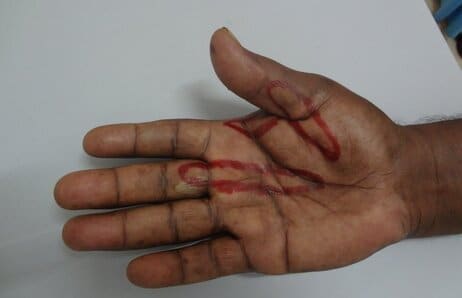
Dupuytren's contracture is a progressive hand condition in which abnormal tissue grows beneath the skin on the palm and fingers. Over time, this tissue tightens and shortens, causing the fingers—usually the ring finger and pinky finger—to bend permanently and curl toward the palm. This curling makes it increasingly difficult to straighten the fingers and perform everyday tasks.
If you've noticed thickened tissue or dimples on your palm, or if your fingers are gradually bending and you can't straighten them, you may have Dupuytren's contracture. This condition develops slowly over years, and many people don't realize what's happening until their hand function becomes noticeably affected.
Dupuytren's contracture is more common than many people realize. While it's not life-threatening, it can significantly impact your ability to work, perform daily activities, and enjoy hobbies.
How Dupuytren's contracture develops
The fascia and how it changes
Beneath the skin of your palm is a layer of tissue called the palmar fascia. In Dupuytren's contracture, this normally thin, flexible tissue thickens and develops abnormal fibrous cords. These cords gradually tighten over time, pulling the fingers down toward the palm.
Why it happens
The exact cause of Dupuytren's contracture isn't fully understood, but researchers have identified several factors that increase the risk:
1. Genetic predisposition
Dupuytren's contracture tends to run in families. If your parents or other relatives have had this condition, your risk is higher. It's particularly common in people of Northern European descent.
2. Age
This condition typically develops in middle-aged and older adults, though it can occasionally occur in younger people. The risk increases significantly after age 40.
3. Male gender
Men are affected more frequently than women, with a ratio of approximately 10:1. However, when women do develop it, the progression is often more aggressive.
4. Certain medical conditions
- Diabetes – People with diabetes have an increased risk
- Liver disease – Particularly cirrhosis
- Epilepsy – Some anticonvulsant medications may increase risk
- HIV/AIDS – Compromised immune function is associated with increased risk
5. Lifestyle factors
- Smoking – Regular smokers have a higher risk
- Alcohol consumption – Heavy alcohol use is associated with increased risk
- Trauma or hand injury – Hand injuries may trigger or accelerate the condition
- Repetitive hand use – Though this is debated, some research suggests heavy hand use may contribute
6. Other factors
- Previous hand surgery
- Certain medications
- Occupational exposure to vibration
Stages of Dupuytren's contracture
Dupuytren's contracture progresses through stages:
Stage 0 (preclinical)
Tissue changes are occurring at a microscopic level, but there are no visible signs yet. You may not know anything is happening.
Stage 1 (early)
You notice thickened tissue or a firm nodule on your palm. The skin may show dimples or puckering. Fingers may start to bend slightly, but function is minimally affected. No pain is typical at this stage.
Stage 2 (intermediate)
Visible cords of tissue appear, and fingers begin to curl more noticeably. You may experience some difficulty with certain hand tasks, though most activities are still possible.
Stage 3 (advanced)
Significant finger contracture has developed. One or more fingers are bent substantially, severely limiting function. Activities like gripping, holding, or washing are difficult or impossible.
Stage 4 (severe)
Fingers are severely bent and essentially non-functional. Even without further progression, quality of life is significantly impacted.
Symptoms of Dupuytren's contracture
Early recognition helps with treatment planning. Watch for these signs:
- Thickened tissue on the palm, feeling firm or rope-like
- Dimples or puckering on the skin of the palm
- Nodules (small lumps) on the palm
- Gradual finger bending – typically starting with the ring finger and pinky
- Difficulty straightening fingers – especially noticeable when trying to open your hand flat
- Problems with daily tasks like washing, putting on gloves, or writing
- Pulling sensation in the palm or fingers
- Skin tightness or lack of flexibility
Why early treatment matters
Many people ignore early signs of Dupuytren's contracture, hoping it will go away on its own. Unfortunately, the condition typically progresses over time without treatment. Early intervention offers several advantages:
- Preserves function – Treating early helps maintain hand function
- Simpler procedures – Early-stage disease requires less invasive intervention
- Better outcomes – Results are typically better when treated early
- Prevents complications – Addressing the condition prevents severe contractures
Problems caused by untreated Dupuytren's contracture
Loss of hand function
Progressive finger contracture makes everyday tasks increasingly difficult. Washing, dressing, working, and hobbies become challenging or impossible.
Grip and dexterity problems
As fingers curl, your ability to grip objects, type, write, or perform fine motor tasks deteriorates.
Work-related challenges
Many occupations require normal hand function. Progressive contracture may force you to change jobs or retire early.
Social and emotional impact
Visible hand deformity can cause embarrassment or self-consciousness. Many people avoid social situations or activities where their hands are visible.
Pain
While Dupuytren's contracture itself is typically not painful, the contracture can cause secondary pain in the palm or fingers.
Difficulty with hygiene
Severe contractures make it difficult to wash your hand properly, increasing infection risk.
Treatment options
Treatment depends on the stage, severity, and your goals. Options range from observation to various interventions.
Stage 1–2: early intervention
Observation and monitoring
If the disease is mild and not affecting function, monitoring without treatment is an option. Regular check-ups help track progression.
Nonsurgical treatments
Several options may slow progression or provide relief:
Injections
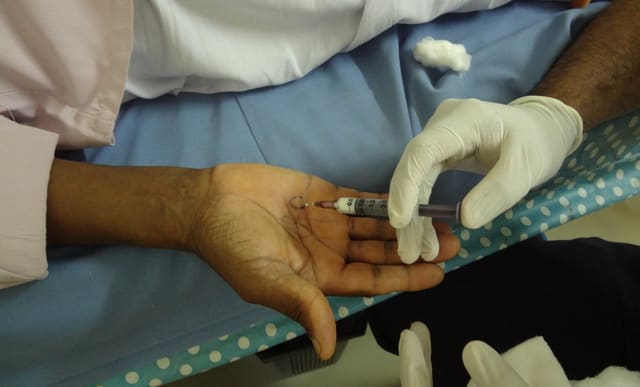
- Steroid injections – May reduce inflammation and slow progression in early stages
Physical therapy
Gentle stretching and hand exercises may help maintain flexibility and delay contracture.
Splinting
Night splints can help maintain finger extension and slow contracture development.
Activity modification
Avoiding activities that stress the hand and controlling risk factors (smoking, alcohol) may slow progression.
Stage 2–3: surgical intervention
Open fasciectomy
A surgical incision is made to remove the abnormal tissue. This is more definitive but requires larger incisions and longer recovery.
Types
- Partial fasciectomy – Removes only the diseased tissue
- Total fasciectomy – Removes all affected tissue
- Limited fasciectomy – Removes the most problematic cords
Advantages
- More permanent solution
- Lower recurrence rate
- Effective for severe contractures
- Better long-term outcomes
Limitations
- More invasive surgery
- Longer recovery period
- Potential for complications
- Higher cost
Dermofasciectomy
In severe cases, the affected skin may be removed along with the diseased tissue and replaced with a skin graft. This is reserved for very aggressive disease or severe recurrence.
What to expect from treatment
Before treatment
We'll perform a thorough examination, assess the stage and severity of your contracture, discuss your hand use and goals, and help you choose the best treatment option.
During treatment
The specific experience depends on which treatment you choose. Most procedures are performed under local anesthesia, so you remain awake but comfortable.
After treatment
Recovery varies:
- Injection: Minimal recovery, return to light activities immediately
- Surgical fasciectomy: Several weeks of recovery, gradual return to full activity over 6-8 weeks
- Physical therapy: Typically recommended after any treatment to optimize results
Follow-up care
Regular follow-up appointments help monitor healing and assess treatment success. Physical therapy may be recommended to maximize hand function.
Prevention and lifestyle modifications
While you can't always prevent Dupuytren's contracture, certain measures may reduce risk or slow progression:
Reduce risk factors
- Stop smoking – Smoking significantly increases risk; quitting reduces it
- Limit alcohol – Moderate alcohol consumption
- Manage diabetes – Good blood sugar control reduces complications
- Protect your hands – Avoid unnecessary trauma and repetitive stress
Hand care
- Perform gentle stretching exercises
- Use moisturizing lotion on your hands
- Avoid prolonged gripping of vibrating tools
- Take breaks during repetitive hand activities
Regular monitoring
If you have risk factors or a family history, have regular hand exams to catch early changes.
Is your condition Dupuytren's contracture?
Only a professional examination can confirm the diagnosis. If you've noticed:
- Thickened tissue on your palm
- Difficulty straightening your fingers
- Dimples or puckering on your palm
- Progressive finger bending
Early diagnosis allows for early intervention and better outcomes.
If you're noticing changes in your hand function or appearance, don't wait. Dupuytren's contracture is progressive, but with early intervention, its impact can be minimized. Treatment options exist that can halt progression, restore function, and improve your quality of life. Many patients are amazed at how much hand function can be restored through proper treatment. Whether you choose nonsurgical approaches or surgical intervention, professional care makes a real difference.
Your hands are essential to everything you do. If you suspect Dupuytren's contracture or have noticed changes in your hand function, reach out to us today. We'll assess your condition, discuss your options, and help you choose the best path forward.With proper treatment and care, you can maintain hand function and continue doing the activities you love.
When should I see a doctor?
Emergency – go to hospital now
- Dupuytren's disease itself is not an emergency.
- After surgery: bleeding that soaks the dressing and does not stop with pressure, or fingers that turn pale, blue or cold
See a doctor within 1–2 days
- After surgery: redness, swelling or pus at the wound, or fever
Care at home, watch for changes
- Book an appointment if a finger is bending towards the palm, you cannot lay your hand flat, or daily tasks like washing or writing are getting difficult.
Questions? Call or WhatsApp us
To book, call or WhatsApp 86060 29762. Anidev answers from 9 am to 6 pm.